

Easter Verbs in English With Examples, Prepositions and Phrases
Easter verbs in English are much easier to remember when you learn them through real-life situations instead of memorizing long lists 🌸

Do you study verbs but forget them when you try to speak?
The problem is not your memory—it’s the way you learn them. When verbs are connected to real life, visuals, and daily use, they become natural and easy to remember.
In this article, you will learn:
- how to understand Easter verbs through real-life context
- the most useful verbs with clear examples
- how to use verbs with prepositions naturally
- how phrases, idioms, and phrasal verbs improve fluency
- how to build a simple system to remember verbs faster
What are Easter verbs in English?
Easter verbs in English are action words used to describe activities and traditions during Easter. They help you talk about real situations like celebrating, decorating, sharing, and preparing food, making your English more natural and meaningful.
Why are Easter verbs in English important to learn?
Easter verbs in English are part of seasonal vocabulary and help you immerse yourself in the culture of the language 🌷 When you understand how people speak during holidays, your English becomes more natural, expressive, and easier to use in conversations.
These verbs are not just vocabulary—they are part of real communication and cultural experience.
How do Easter verbs in English work in real life?
The best way to learn verbs is to see them in action.
Celebrate – We celebrate Easter with our family.
Decorate – Children decorate eggs in bright colors.
Hunt – Kids hunt for chocolate eggs.
Share – We share sweets with friends.
Bake – Families bake traditional desserts.
Wish – People wish each other a happy Easter.
When you learn verbs like this, you connect action, meaning, and situation, which helps you remember them longer.
Easter verbs in English with prepositions
This is where your English starts to sound natural and fluent.
Many verbs change meaning when combined with prepositions:
Look for – to search
We look for eggs during the Easter hunt.
Look at – to observe
Look at these beautifully decorated eggs.
Prepare for – to get ready
We prepare for Easter by cleaning and decorating.
Share with – to give something to someone
I share Easter chocolate with my friends.
Think about – to consider
I think about my family during the holidays.
Learning verbs with prepositions helps you:
- understand real spoken English
- avoid common mistakes
- express yourself more clearly
Easter verbs in phrasal verbs
Phrasal verbs are essential if you want to sound natural in everyday English 🧠
They are verbs combined with particles (like up, out, together) and often have meanings that are different from the original verb.
Come together
Meaning: to gather as a group
Example: Families come together to celebrate Easter.
Give out
Meaning: to distribute
Example: They give out chocolate eggs to children.
Set up
Meaning: to organize or prepare
Example: We set up decorations before Easter dinner.
Join in
Meaning: to participate
Example: Everyone joins in the Easter activities.
Pick out
Meaning: to choose
Example: Children pick out their favorite Easter treats.
When you use phrasal verbs, your English becomes more natural and closer to how native speakers communicate.
Easter verbs in idioms and phrases
To take your English to the next level, you need to understand how verbs work inside idioms and common expressions.
Breathe new life into something
Meaning: to make something fresh or exciting again
Example: Easter traditions can breathe new life into family time.
Make memories
Meaning: to create special experiences
Example: We make beautiful memories during Easter.
Spend time with
Meaning: to be with someone
Example: We spend time with family during the holiday.
Bring people together
Meaning: to unite people
Example: Easter celebrations bring people together.
These expressions help you speak more naturally and express emotions more clearly.
How to learn Easter verbs in English faster
If you want to remember verbs, you need a simple and effective system.
Start by learning verbs in context
Do not memorize lists. Always connect each verb to a real situation. Ask yourself where and when you would use it.
Use visual learning 🎨
Visuals help your brain remember faster. When you see someone decorating eggs, the verb becomes easier to recall.

This image is a perfect example of why visual learning works so well, especially for language learners. Let’s break it down in a simple, practical way 👇
1. Words become actions (not just vocabulary)
Instead of seeing only the verb “pick up”, the learner sees a hand picking up an egg.
👉 This creates a real-life connection.
Your brain doesn’t store it as a translation—it stores it as an action you can imagine or repeat.
2. Context makes meaning clear instantly
Look at:
- Look for eggs
- Take out the candy
- Give out Easter treats
Even without long explanations, the images show:
- where the action happens
- who is doing it
- what the result is
👉 This removes confusion and reduces the need for translation.
3. Visual memory is stronger than text memory
When learners see:
- colorful eggs
- kids playing
- real objects
They create mental pictures.
👉 And your brain remembers images much faster than plain text.
That’s why learners can recall:
- the scene → then the verb
instead of struggling to remember isolated words.
4. Emotions + colors improve retention
Your image is:
- bright
- playful
- positive
👉 This matters more than it seems.
When learning feels:
- fun
- relaxed
- engaging
the brain stores information longer and more deeply.
5. Chunk learning (not isolated words)
Each block in your image teaches:
- verb + object + situation
Example:
- give out + Easter treats + to friends
👉 This helps you speak in complete ideas, not single words.
Visual Learning Techniques for English Learners to Boost Long-Term Memory
Use AI tools
You can use ChatGPT to create examples, practice conversations, or test yourself. This turns learning into an active process.

In this guide, you’ll meet Ai-Va, an AI-powered language learning assistant, designed to help you learn English smarter—not harder.
GUIDE: AI The New Era of Language Learning
Discover how to use AI and a proven system to study faster and remember forever.
Who is this guide for?
- Learners who feel language learning still isn’t sticking
- Anyone aiming for fluency but tired of ineffective drills
- Teachers seeking smarter tools for real progress
- Professionals who need practical English for work
- Newcomers and travelers using English every day
- Parents supporting learning at home
Practice in small daily sessions
You don’t need hours. Just 5–10 minutes a day is enough when you repeat and review consistently.
Speak and write immediately
Don’t wait until you feel ready. Use verbs right away in sentences and short conversations.
Combine verbs with vocabulary
Learn phrases, not just words:
decorate eggs
hunt for chocolate
celebrate with family
This builds real communication skills.

From My Experience
Based on my experience as an English learner — and later as a teacher and mentor — I openly share the struggles and mistakes I made, so others don’t have to repeat them. I share the practical tips and methods that helped me move from frustration to confidence.
From My Experience
When I was learning languages, I used to memorize long lists of verbs. I spent hours studying, but I forgot most of them.
As a teacher, I saw the same frustration in my students.
Everything changed when I started using:
- real-life examples
- visual learning
- simple daily routines
My students began to remember more and speak with confidence.
That’s when I realized something important:
It’s not about working harder.
It’s about working smarter.
FAQ
Key Takeaways
- Learn verbs in context, not as isolated words
- Easter verbs in English help you connect with culture 🌸
- Use prepositions, phrasal verbs, and idioms for natural speech
- Visual learning improves memory
- Small daily practice leads to real progress

What to Read Next
Start with the related article. Continue with the updated guides.
🔗 Related
🔗 Proven Tips on How to Easily Learn Confusing English Verbs
🔗 Phrasal Verbs for Organizing Daily Life With Visual Learning
🔗 Turn Phrasal Verbs in English: Easy Ways to Sound Natural
🔗 Five Expert Tips for Understanding & Usage of English Idioms
🔗 Idiom Insights: Practical Hints for Effective Learning and Comprehension
🔗 Exploring English Idioms & Mastering Vibrant Colorful Conversations
🔗 Idioms: How to transform chats into captivating Verbal Arts
🔗 10 Strong English Positive Idioms To Describe a Person
🔗 10 Quick Tricks to Master Idioms for Everyday Conversations
🔗 How to Elevate Your Communication with English Power Words
🔗 English Food Idioms Explained Through Examples, Not Definitions
What To Do Next
Now that you understand how Easter verbs in English work, take the next step and build a system that works for you.
Start simple:
- choose 5 verbs from this article
- write 3 sentences with each
- say them out loud
Then go deeper:
- create your own seasonal vocabulary lists
- practice verbs with prepositions daily
- use one phrasal verb and one idiom every day
If you’re ready to move faster and see real progress, explore my programs and guides designed to help you learn smarter, not harder.
Inside Roadmap to Fluency, you’ll learn how to:
- build a structured learning routine
- combine visual learning with AI tools
- stay consistent without feeling overwhelmed
You can also explore my guide:
How to Learn English Verbs Faster: Clear Explanations with Examples
This will help you:
- understand how verbs connect
- avoid common mistakes
- create a system that actually works
Final words
Learning English verbs doesn’t have to feel difficult.
You don’t need to do more.
You need to do it differently.
When you combine structure, visuals, and real-life practice, progress becomes natural.
This is the foundation of your Roadmap to Fluency—helping you move step by step from confusion to confidence.
PS. Oh, before I forget…
If you’re planning to travel for Easter ✈️, make sure to check out my guide for confident communication in real-life situations.
It will help you feel more prepared, speak more naturally, and enjoy your trip without stress 😊
TRAVEL GUIDE
Survival Handbook
Confident Conversations Abroad covers essential topics such as:
- Cultural sensitivity
- The power of non-verbal communication
- Managing challenging conversations
- Harnessing the potential of technology
- And much more!
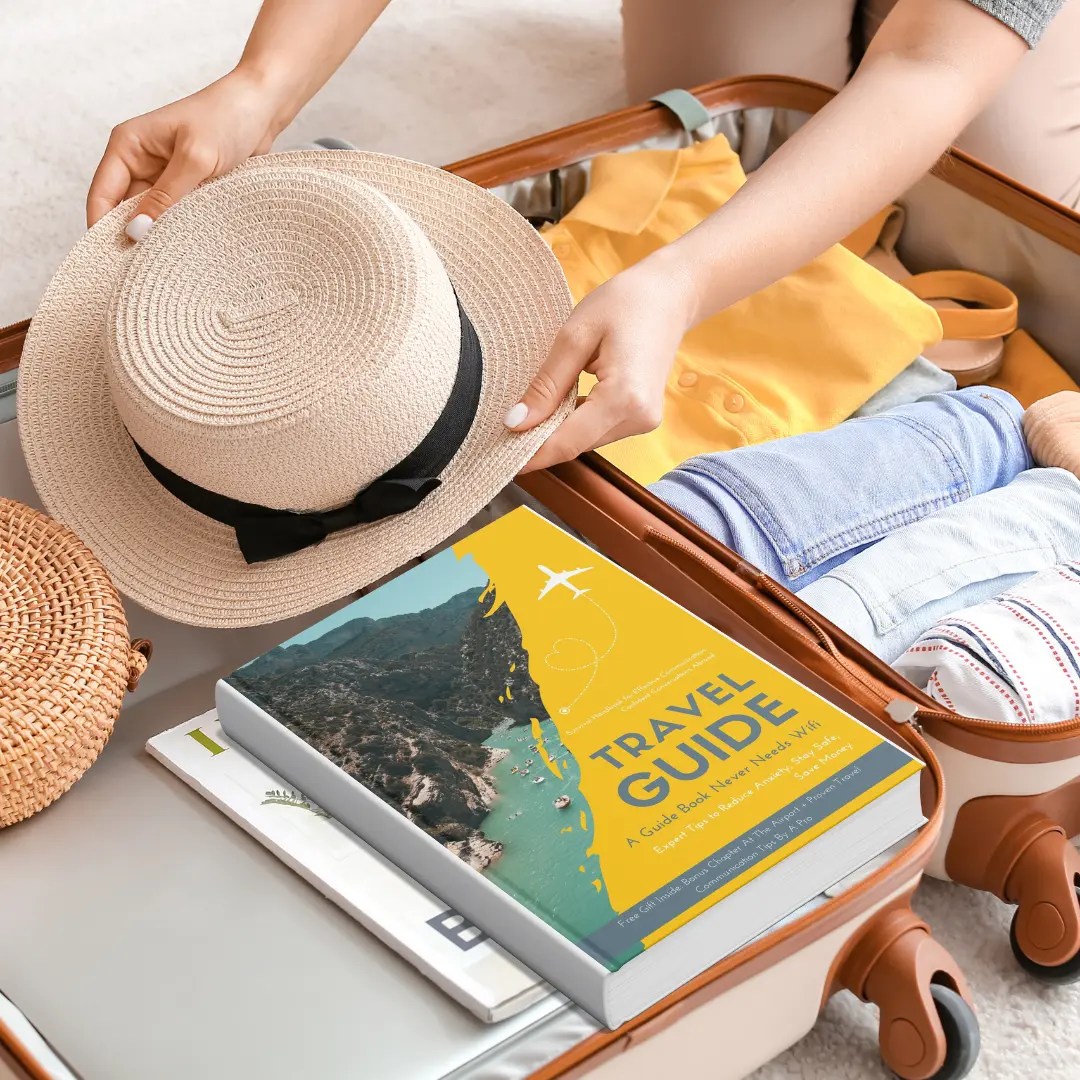
Expert Tips to Reduce Anxiety, Stay Safe, Save Money


